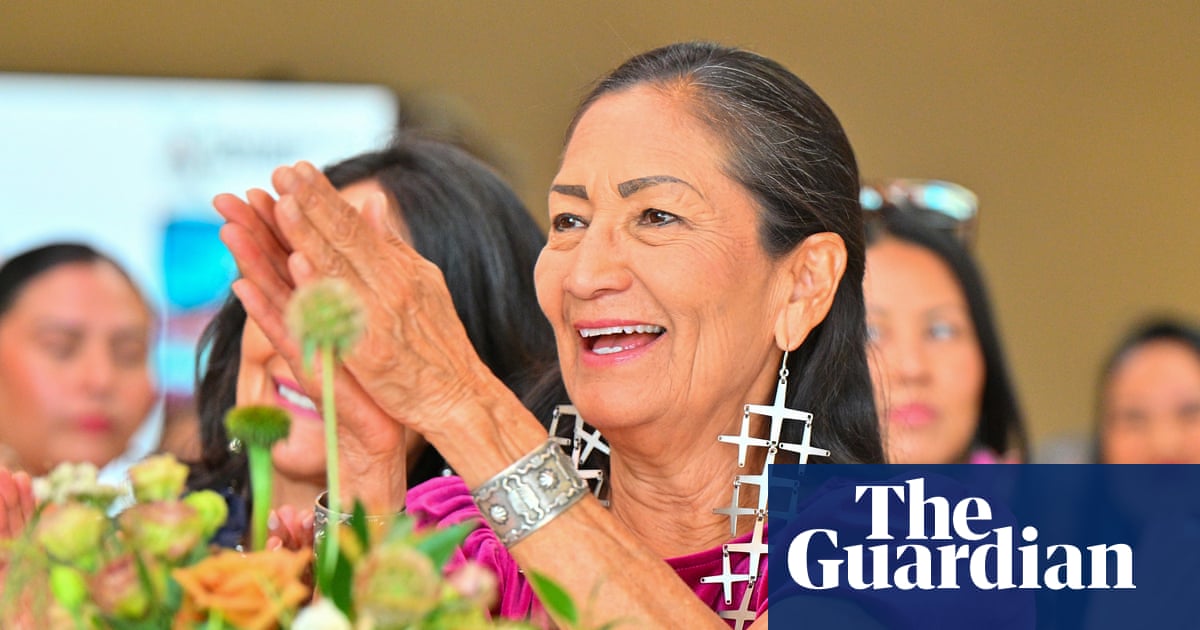
Deb Haaland has won the gubernatorial election in New Mexico, defeating her Republican opponent, Rio Rancho Mayor Gregg Hull. The historic victory makes Haaland the first Native American woman to serve as a state governor in the United States, marking another milestone in her political career and signaling a broader shift in Indigenous representation across American politics.
Haaland, 65, previously made history as the first Indigenous cabinet secretary when she was appointed to lead the Department of the Interior in 2021. A member of Laguna Pueblo, her victory comes in a state where Native Americans make up approximately 12 percent of the population and where Indigenous voters have increasingly become a decisive political constituency.
A Barrier-Breaking Career in Public Service
Haaland’s rise through local, state, and national politics has been defined by landmark political milestones. Throughout her campaign, she frequently spoke about her background as a single mother who relied on Medicaid, WIC, and food stamps before attending law school in her 30s.
Before entering federal politics, Haaland worked as a tribal administrator at San Felipe Pueblo and became the first woman elected to the board of directors for the Laguna Development Corporation. In 2012, she directed the Native American vote program in New Mexico for Barack Obama’s presidential campaign. After a 2014 campaign for lieutenant governor, she became the first Native American woman to chair a state political party.
Haaland stepped into the national spotlight in 2018 when she and Kansas Representative Sharice Davids became the first Native American women elected to Congress. Following her election to the U.S. House of Representatives, President Joe Biden tapped her to head the Interior Department, placing her in charge of federal lands and relations with Native American tribes.
Expanding Indigenous Representation
Haaland’s victory comes during a landmark election cycle for Indigenous representation. A record-setting 358 Indigenous candidates ran for office in local, state, and federal elections across the country. Key races featured notable contenders, including Minnesota Lieutenant Governor Peggy Flanagan and former Alaska Congresswoman Mary Peltola, both seeking to break barriers of their own.
This rise in political engagement contrasts sharply with the long struggle for Indigenous voting rights in the United States. Native Americans were not fully guaranteed voting rights across every state until the 1960s.
In New Mexico, full voting rights were secured only after Second World War veteran and Isleta Pueblo tribal member Miguel Trujillo sued the state in 1948. More recently, New Mexico updated its Native American Voting Rights Act in 2023, expanding tribal consultation on redistricting and improving access to polling locations on tribal lands.
Local Perspectives and Political Debate
While Haaland’s historic milestone has drawn widespread national attention and celebration, the gubernatorial campaign also brought local scrutiny regarding her policy positions and campaign style. Some observers noted her steady, platform-backed approach, while others expressed reservations about her record on tech developments and public appearances.
Discussing her performance on the trail, one observer remarked:
"Very generic, DNC approved candidate, took money from Oracle/Project Jupiter, poor stage presence, not much of a public speaker. She could run a functional administration, but she doesn't have what it takes to get elected and wouldn't challenge the status quo."
Others reflected on the broader significance of the election season's historic outcomes, with one noting:
"It took a quarter of a millennium for a woman from her own native land to get here."
Haaland's win in New Mexico represents a foundational moment in U.S. history, reflecting a growing movement of Indigenous political engagement and leadership at all levels of government.

